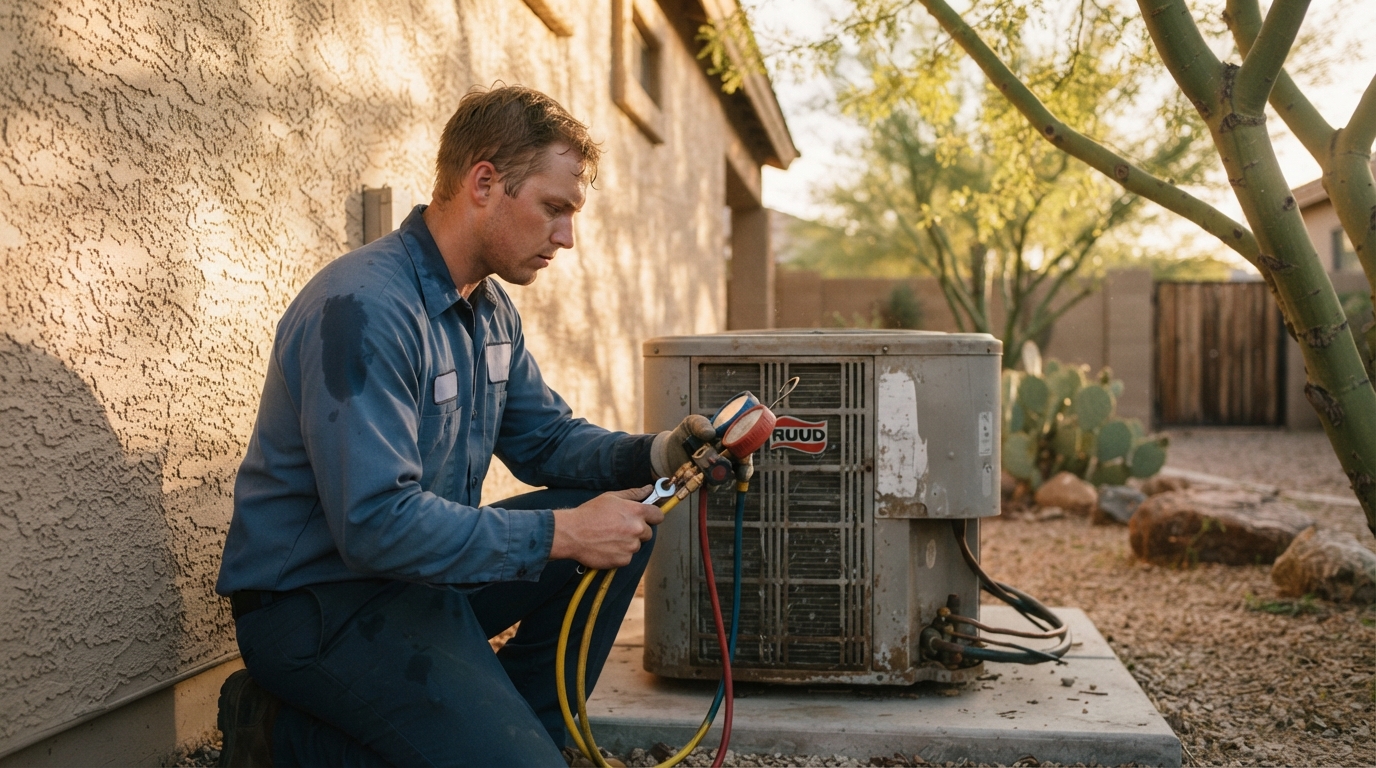
• Routine HVAC service identifies minor issues before they cause breakdowns or costly repairs.
• Regular maintenance supports steady energy use and consistent indoor comfort during Buckeye, AZ summers.
• Scheduled checkups can extend equipment lifespan and help preserve manufacturer warranty coverage.
Routine HVAC service means scheduling regular inspections, cleaning, and tune-ups for a home’s heating and cooling system rather than waiting for a breakdown to call a technician. For homeowners weighing the value of preventive maintenance against reactive repairs, the short answer is that consistent servicing tends to reduce long-term costs and improve system reliability.
A properly maintained system also runs more predictably through extreme heat, which matters in a desert climate. Scheduling HVAC Service Buckeye, AZ on a seasonal basis allows a technician to check refrigerant levels, inspect electrical connections, and clean components that affect airflow and efficiency. These checks are typically far less expensive than emergency repairs triggered by a mid-summer system failure.
Why Routine Maintenance Matters in a Desert Climate
Buckeye, AZ regularly experiences extended stretches of triple-digit temperatures, which places sustained strain on air conditioning equipment. Systems that run near-continuously during peak summer months accumulate dust and debris faster, and components wear down more quickly under heavy use.
• Dust and fine sand common in the region can clog filters and coils faster than in milder climates.
• High ambient heat forces compressors and fans to work harder, increasing the chance of premature wear.
• Extended cooling seasons mean less downtime for components to rest between duty cycles.
According to the EPA’s guidance on home energy efficiency, routine maintenance of heating and cooling equipment is one of the most effective ways to keep systems operating efficiently and to reduce avoidable energy waste.
Routine Service Versus Reactive Repairs
Comparing scheduled maintenance to a wait-and-fix approach highlights clear differences in cost, convenience, and system longevity.
|
Factor |
Routine Service |
Reactive Repair |
|
Timing |
Scheduled in advance, often seasonally |
Occurs after a breakdown, often urgent |
|
Typical cost |
Lower, predictable service costs |
Higher, due to emergency labor and parts |
|
System impact |
Minor issues caught early |
Problems often more advanced before repair |
|
Comfort disruption |
Minimal, planned around household needs |
Significant, especially during extreme heat |
This comparison does not guarantee specific outcomes for every household, but it reflects the general pattern recognized across the HVAC industry: addressing small issues early tends to prevent larger failures later.
Practical Benefits Homeowners Notice
Several benefits of routine HVAC service become apparent over time rather than immediately after a single visit.
1. Consistent indoor comfort. Regular cleaning and calibration help systems maintain steady temperatures throughout the home.
2. Fewer unexpected breakdowns. Technicians can catch worn belts, failing capacitors, or refrigerant leaks before they cause a full system stoppage.
3. Extended equipment lifespan. Components that are cleaned and adjusted regularly generally experience less cumulative stress.
4. Warranty compliance. Many manufacturers require documented maintenance to keep warranty coverage valid.
Based in USA, Level Up Heating & Cooling LLC serves customers across Buckeye, AZ, reflecting how HVAC maintenance providers often operate across a defined service area rather than a single physical location. Homeowners considering a maintenance plan can review service details through the Level Up Heating & Cooling LLC online profile before scheduling an appointment.
How often should a home HVAC system be serviced? Most manufacturers and technicians recommend at least one inspection per season, with some households in hot climates opting for checkups before and after peak summer use.
What does a routine HVAC inspection typically include? A standard visit generally covers filter checks, coil cleaning, refrigerant level verification, electrical connection inspection, and thermostat calibration.
Can routine service lower monthly energy bills? A well-maintained system generally operates more efficiently than a neglected one, which can contribute to more stable energy use, though savings vary by household and equipment age.
Is routine service necessary for a newer HVAC system? Yes. Even new systems benefit from scheduled checkups, and many warranties require proof of maintenance to remain valid.
Homeowners planning ahead for seasonal temperature swings often find it easier to schedule maintenance during shoulder seasons, before systems face peak demand. Current scheduling information for Level Up Heating & Cooling LLC is available for households planning seasonal upkeep. Reviewing maintenance history alongside a technician’s recommendations can help homeowners decide how frequently their specific system needs attention.