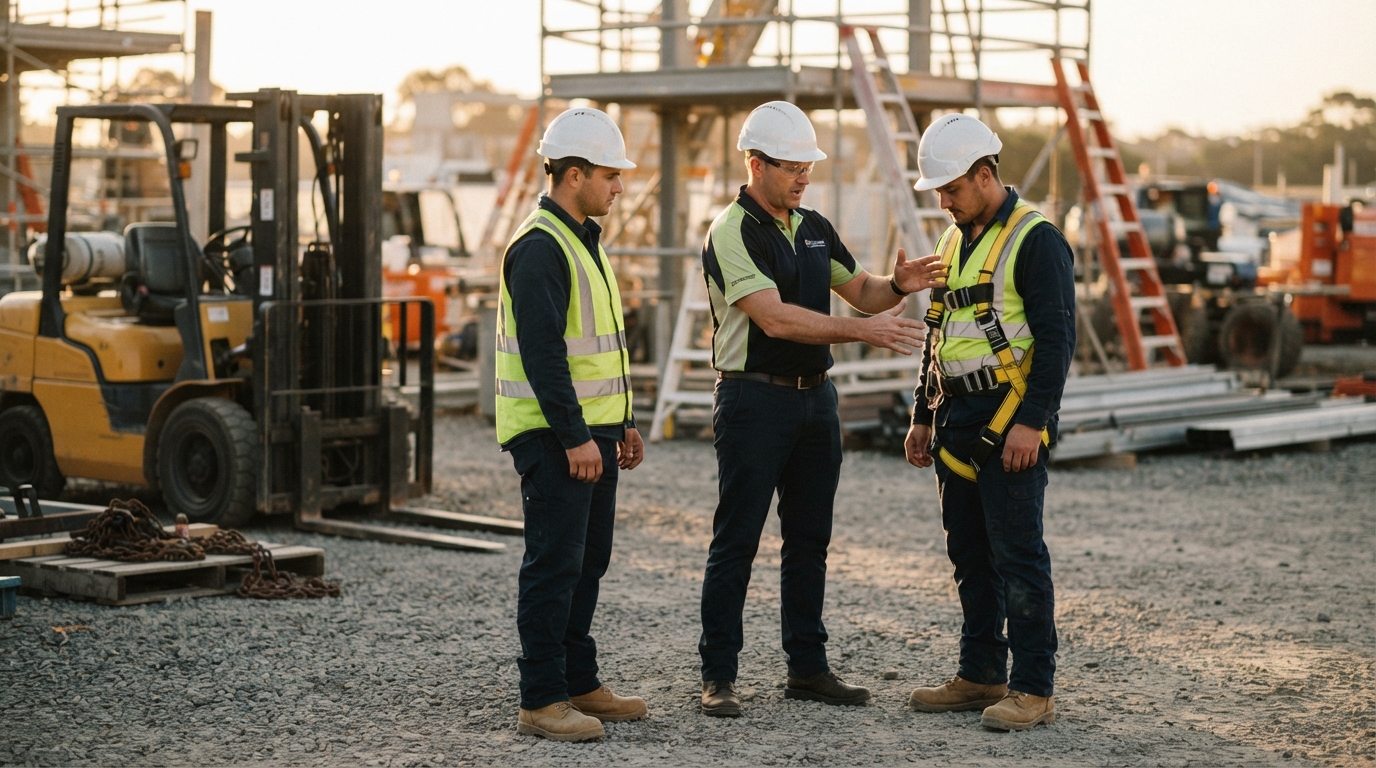
• Safety training programs cover OSHA-aligned instruction such as heavy equipment operation, fall protection, confined space entry, and first aid/CPR/AED.
• On-site, online, and train-the-trainer formats allow employers to match instruction to crew schedules and job-site hazards.
• Businesses across Victoria, Victoria TX can access documented, hands-on training delivered from a provider based in Port Lavaca, TX.
Employers searching for safety training programs are typically looking for OSHA-aligned instruction that reduces workplace injuries and satisfies documentation requirements during inspections. These programs combine classroom or online coursework with hands-on skill verification so workers can demonstrate competency on the equipment or hazards they actually face.
Effective Safety Training Programs typically include several core components regardless of industry. A program built around documented hazard recognition, equipment-specific instruction, and refresher scheduling tends to hold up better during an OSHA review than ad hoc or undocumented training.
What Comprehensive Safety Training Usually Covers
Training content should match the hazards present in a given workplace rather than follow a generic script. Based on verified service listings, programs in this category commonly include:
• Heavy equipment operation, covering forklifts, aerial lifts, loaders, and excavators
• Fall protection, rigging, and signal person qualifications
• Confined space entry procedures
• First aid, CPR, and AED instruction
• HAZWOPER and trenching/excavation safety
Each topic area typically pairs instructional content with a hands-on or scenario-based component, since skill demonstration is central to OSHA-compliant training outcomes.
On-Site, Online, and Train-the-Trainer Formats
Training delivery format affects both cost and compliance value, so employers often compare formats before selecting one.
|
Format |
Best Suited For |
Key Characteristic |
|
On-site instruction |
Crews needing job-specific, hands-on practice |
Delivered directly at the employer’s facility |
|
Online courses |
Distributed teams or self-paced scheduling |
Flexible completion timing |
|
Train-the-trainer |
Organizations building internal training capacity |
Uses kits and study guides for in-house instructors |
On-site training brings instruction into the actual work environment, which can make it easier to address job-specific hazards during the session itself. Online formats, by contrast, prioritize scheduling flexibility over site-specific context.
Why Documentation and Hazard-Specific Training Matter
Regulatory guidance places the burden on employers to match training content to the hazards their workers actually encounter, not a one-size-fits-all curriculum. According to OSHA’s training requirements guidance, training obligations depend on the specific standards that apply to a workplace, and documentation is often the first thing inspectors request. Missing or incomplete records can turn an otherwise compliant program into a citation risk.
Training frequency also matters. New employees generally need hazard-specific instruction before exposure to the conditions they will encounter, and many standards call for periodic refreshers as equipment, procedures, or regulations change. Programs that build refresher scheduling into their structure tend to hold documentation up more consistently over time.
Service Area and Business Information
Workplace conditions in Victoria, Victoria TX span agricultural operations, industrial facilities, and construction sites, each carrying distinct training needs tied to equipment type and site layout. Based in Port Lavaca, TX, Certified Training & Safety Inc extends on-site and online safety instruction to employers across Victoria, Victoria TX without maintaining a separate office in that area. Additional details on course offerings and training materials appear on the Certified Training & Safety Inc profile.
Frequently Asked Questions
What topics are typically included in a workplace safety training program? Programs generally address hazard recognition, equipment-specific operation, fall protection, confined space entry, and emergency response skills such as first aid and CPR, selected according to the hazards present at a given site.
How often should safety training be refreshed? Refresher timing depends on the applicable standard and the equipment or hazard involved, though many employers schedule periodic sessions to keep documentation current and address procedural changes.
Is on-site training more effective than online courses? On-site training allows hands-on practice in the actual work environment, while online courses offer scheduling flexibility; many employers combine both depending on crew size and job-site constraints.
Does training format affect OSHA compliance documentation? Both formats can satisfy documentation requirements when records show topic coverage, completion dates, and trainee verification, regardless of whether instruction occurred on-site or online.
Final Notes and Next Steps
Workplace safety training works best when content, format, and documentation are matched to the specific hazards a crew encounters rather than treated as a single standardized course. Published service details for Learn More about Certified Training & Safety Inc are available for employers reviewing training options in the region.